From real stories to language learning: my contribution to Giovani Reporter
Creating Content for Giovani Reporter: Behind the Scenes of an Italian Language Workbook
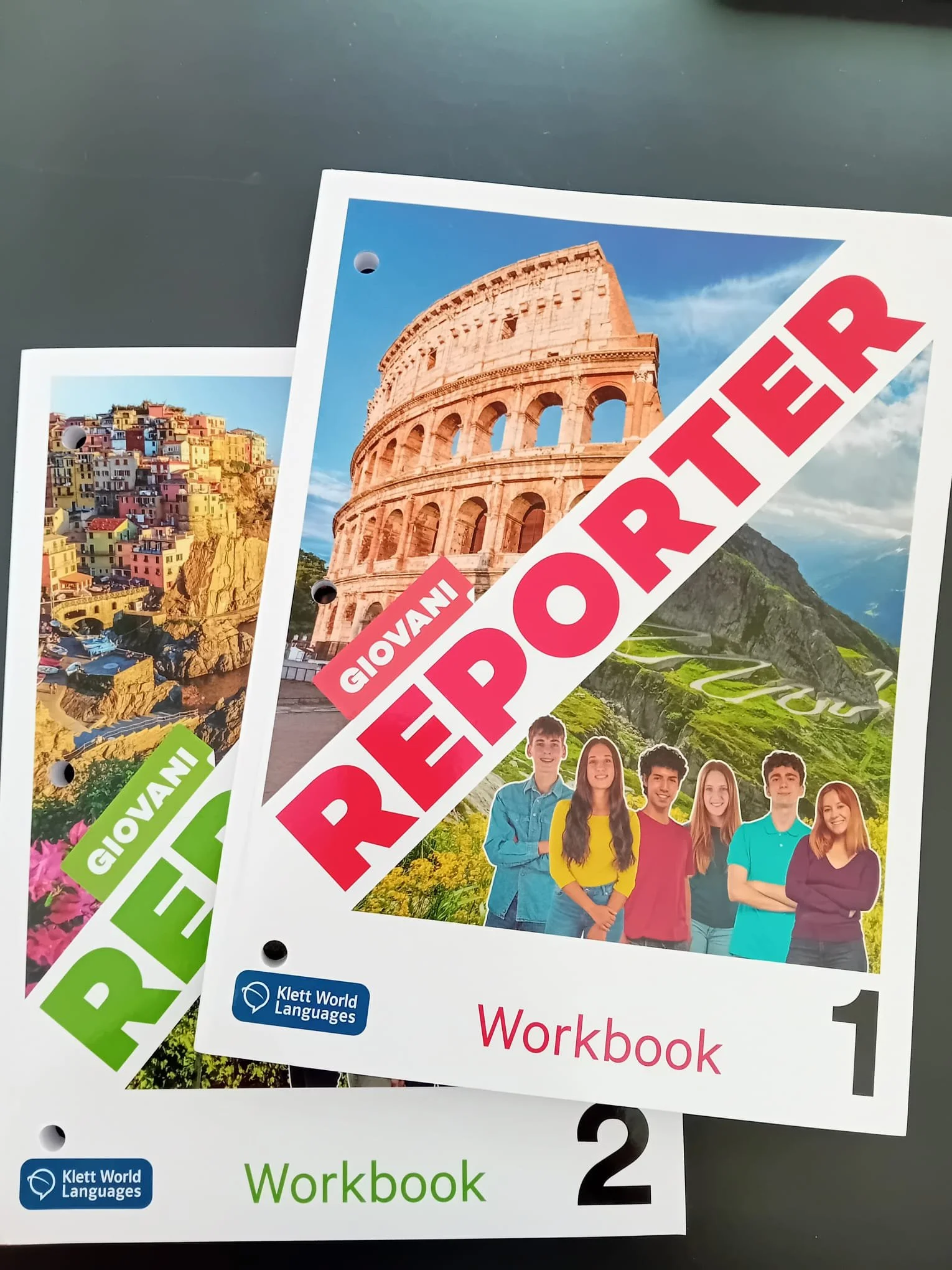
Today I finally received my copies of Giovani Reporter 1 and Giovani Reporter 2, the new workbooks published by Klett World Languages as part of an innovative Italian program for middle and high school students learning Italian as a foreign language.
Seeing the finished books in print was particularly rewarding because they represent much more than a collection of exercises. They are the result of a collaborative process involving editors, authors, reviewers, and contributors working together to create meaningful language-learning experiences for young learners.
Developing Content for Young Learners
As a contributing writer, I had the opportunity to develop a wide range of content for the workbooks. Following the editorial team's pedagogical vision and detailed guidelines, I created activities, reading texts, listening scripts, dialogues, and communicative tasks designed to help students engage with Italian in authentic and motivating ways.
One of the aspects I enjoyed most was turning authentic stories into materials that students could read, discuss, and connect with.
From Real Stories to Learning Materials
Language textbooks often rely on fictional characters and invented situations, but whenever possible, I like to draw inspiration from real people and real experiences. For one chapter focused on food, identity, and personal stories, I wrote an article inspired by a friend of mine, Maria Daniela, founder of Polpetta Lokale Gastronomie in Amsterdam. She delivers homemade Apulian dishes around the city on a cargo bike, combining entrepreneurship, sustainability, and a passion for regional Italian cuisine.
Turning her story into an educational text allowed me to bring a genuine contemporary Italian voice into the learning experience.
This is one of the challenges I find most fascinating when developing materials for Italian language education: creating content that is pedagogically effective while remaining authentic, relevant, and engaging for learners.
A Communicative Approach to Italian Language Learning
The Giovani Reporter series follows a communicative and proficiency-based approach that encourages students to become active participants in their learning. Rather than simply memorizing vocabulary and grammar, learners are invited to explore real-world topics, develop intercultural awareness, and use Italian to communicate ideas, opinions, and experiences. The program is designed for middle and high school learners and aims to connect language learning with the world students live in today.
Behind Every Workbook Page
Working on these workbooks reminded me that educational publishing is, at its core, a creative process. Every activity begins with a question: How can we help learners use the language meaningfully? Every dialogue, article, listening text, or exercise is an attempt to create a bridge between language and life.
I am grateful to the editorial team for the opportunity to contribute to this project and excited to know that students and teachers will soon be using these materials in their classrooms.
Projects like Giovani Reporter continue to strengthen my interest in educational content creation, materials writing, curriculum development, and Italian as a foreign language education.
And, perhaps most importantly, they remind me that behind every workbook page there is a story.